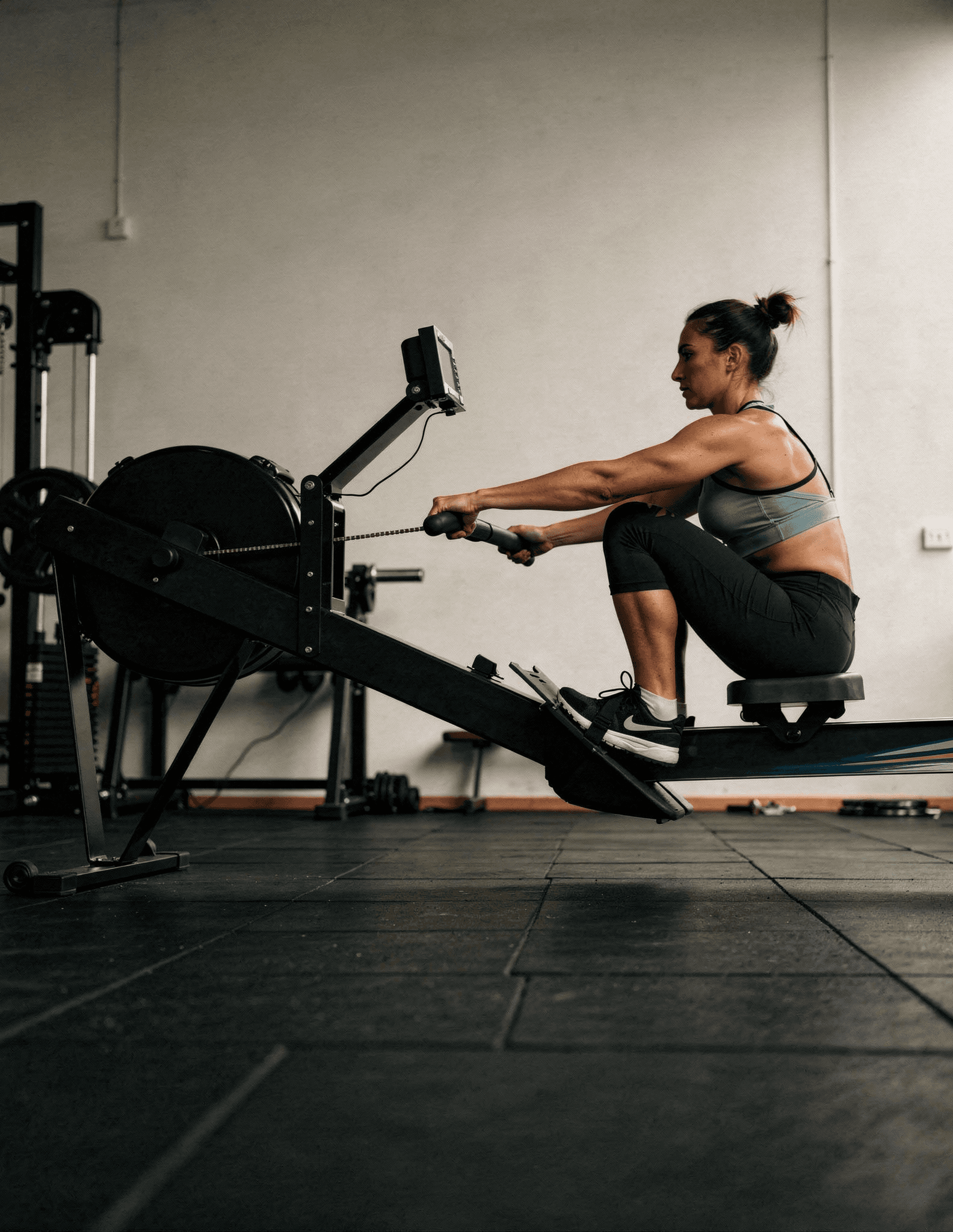
If protein is the food side of protecting your muscle, resistance training is the movement side. The two work together, and the return on the movement side is genuinely striking - you don't need much to get most of the benefit. Not a gym membership, not an hour a day, not a complicated program you have to think about. Two short sessions a week, done with reasonable consistency, is one of the highest-return habits available to you while you're on treatment.
This is not about becoming an athlete or chasing a certain look. It's about protecting something quietly valuable while you lose weight, and setting yourself up so that treatment keeps working the way it's supposed to. Let's walk through why it matters, exactly what to do, and how to keep getting more out of it week after week.
Why weight loss puts your muscle at risk
When you lose weight, you don't only lose fat. Some of what comes off is muscle, and that happens on any approach that puts you in a calorie deficit - dieting, surgery, or medication. Your body is practical. When it's taking in less energy than it burns, it looks for tissue it can afford to shed, and muscle is metabolically expensive to maintain. If nothing is asking that muscle to stay, the body reads it as a cost it can cut.
That's the quiet risk underneath weight loss. The number on the scale drops, which feels like progress, but a share of that drop can be strength you'd rather keep. Muscle is what carries you up stairs, lifts groceries, keeps your posture upright, and supports your joints. It's also part of what keeps your metabolism from slowing more than it has to. Losing fat is the goal. Losing muscle along with it is the tax you want to avoid paying, and resistance training is how you avoid most of it.
The number that should convince you
Here is the finding worth sitting with. A meta-analysis of people losing weight through calorie restriction found that adding resistance training prevented roughly 93.5 percent of the muscle loss that dieting alone would have caused. Read that again. Nearly all of the muscle you'd otherwise lose, kept - just by adding some strength work on top of the same weight loss.
Sit with what that ratio means in practice. It says the difference between losing weight and losing weight well isn't a punishing regimen. It's a modest, repeatable habit. The people in that analysis weren't training like competitors. They were doing resistance work consistently enough to send their bodies a clear signal - this muscle is in use, keep it - and that signal did almost all of the protective work.
That evidence comes from weight loss generally, not GLP-1 treatment specifically. But the mechanism is exactly the one your treatment puts you in. You're eating less, so your body is deciding what to hold onto and what to release. Lifting is the reason it holds onto muscle, and protein is the raw material it uses to do so. The two are a pair. Training without enough protein is like sending the signal with nothing to build from. If you haven't set your protein target yet, that's the companion piece to this one - see our protein guide.
Why this matters for your dose
There's a second reason strength work belongs in your routine, and it's specific to how treatment progresses. Muscle is the physical foundation your body leans on as your dose steps up. The stronger and more resilient you are, the more steadily your body tends to handle each stage of the plan your clinician sets.
You're not training for a marathon or a personal record. You're building the base that lets treatment do its job without wearing you down. Think of it the way your dose itself is designed - it steps up gradually, giving your body time to adjust at each level. Your strength works the same way. A little more, a little more, over time. The two step up together, and each one supports the other.
A beginner routine (no gym required)
Two sessions a week, 20 to 30 minutes each. Full body every time. Bodyweight is a completely valid place to start, and for many people it's plenty for the first several weeks. Here's the core routine, with a gym-equipment option in case you have access and prefer it.
Squats - stand up and sit down from a chair without using your hands, or lower into a squat and rise back up. Gym option: goblet squat holding a single dumbbell or kettlebell at your chest. Start with 2 sets of 10.
Push-ups - against a wall or a kitchen counter to start, dropping toward the floor only as you get stronger. Gym option: chest press with dumbbells or a machine. Start with 2 sets of 8.
Rows - loop a resistance band around a sturdy anchor and pull the handles toward your ribs, or lift anything with a bit of weight toward you. Gym option: seated cable row or dumbbell row. Start with 2 sets of 10.
Glute bridges - lie on your back, knees bent, and drive your hips up until your body is a straight line from shoulders to knees, then lower. Gym option: hip thrust with a light weight across your hips. Start with 2 sets of 12.
A carry - pick up something heavy in each hand and walk it across the room and back, standing tall. Gym option: farmer's carry with dumbbells or kettlebells. Start with 2 trips across the room.
Rest about a minute between sets, or as long as you need to catch your breath. Move at a pace where the last two or three reps of each set feel like real effort but your form stays clean. That "real effort with clean form" feeling is the target. If you could easily do five more reps, it's time to make it a little harder. If your form is breaking down, it's too much for now.

How to progress over the first six weeks
The single most important idea in all of strength training is progression - asking a little more of your muscles over time so they have a reason to keep adapting. Here's a simple way to do it without overthinking anything.
Weeks 1 to 2 - learn the movements. Do the routine as written, twice a week. Your only goal is to get comfortable and consistent. Don't chase difficulty yet.
Weeks 3 to 4 - add reps. When a set starts to feel manageable, add a rep or two. Squats might go from 10 to 12, push-ups from 8 to 10. Small steps.
Weeks 5 to 6 - add a set or a little load. Once you're comfortably hitting the higher reps, add a third set to one or two movements, or introduce a little weight - a heavier object to carry, a filled backpack for squats, a thicker band for rows.
That "add a little over time" pattern is the entire secret, and it never stops working. The same way your dose steps up under your clinician's guidance, your strength steps up under your own. You don't need to add something every single session. You just need the general direction to be upward over the weeks.
Common mistakes to skip
A few missteps trip people up early. None of them are dramatic, and all of them are easy to avoid once you know to look for them.
Doing too much on day one. Enthusiasm is great, but a punishing first session usually leads to soreness that makes you skip the next one. Start easier than you think you should. Consistency beats intensity every time.
Skipping the movements you find hard. The exercises that feel awkward are often the ones doing the most for you. Modify them to be easier rather than dropping them.
Ignoring protein. Training sends the signal to keep muscle, but protein is the material your body builds with. The two are inseparable. See the protein guide if you haven't set your target.
Rushing the reps. Moving slowly and with control does more than flinging weight around. Lower under control, pause briefly, rise with intention.
Chasing soreness as proof. Feeling worked is fine. Being so sore you can't function isn't a badge - it's a sign you did too much. Steady effort you can repeat is what protects muscle.
Recovery basics
Muscle isn't built during the session. It's built in the hours and days afterward, while you rest. That's why two sessions a week works so well - the gap between them is doing real work, not wasted time. Leave at least a day between strength sessions so the muscle you trained has time to recover and adapt.
The basics of recovery are unglamorous and effective. Sleep is where most of the repair happens, so protect it. Eat enough protein spread across the day to give your body a steady supply of material. Stay hydrated. Some mild soreness in the day or two after a session is normal, especially early on, and it eases as your body gets used to the work. Gentle movement on your off days - a walk, some easy stretching - often helps more than sitting still.

Quick answers
Do I need a gym? No. The routine above is built to be done at home with your bodyweight and maybe a resistance band. A gym gives you more options, but it isn't required to get most of the benefit.
How long until it feels easier? Most people find the movements start feeling more natural within the first couple of weeks, which is exactly when you begin adding reps. The habit tends to get more satisfying, not less, as you go.
What if I'm sore? Mild soreness after a session is normal early on and usually eases within a day or two. If soreness is sharp, lingering, or centered in a joint rather than a muscle, ease off and check in with your care team.
Is twice a week really enough? Yes. The evidence behind this article is built on consistent resistance training, not daily marathon sessions. Two focused, full-body sessions a week is enough to protect the large majority of the muscle you'd otherwise lose.
How does this fit with the rest of my plan? It pairs directly with your protein intake and builds over the same kind of timeline your treatment follows. For a sense of how the weeks ahead tend to unfold, see your timeline.
The bottom line
Two short sessions a week protects almost all the muscle you'd otherwise lose, builds the strength your body uses to handle higher doses, and needs no equipment to start. Add a little over time, feed it with protein, and give it room to recover. Few habits pay back this well for this little.
Members only: Training hard and feeling it in the joints, or recovering slowly? Many members add recovery peptides to the stack - our most popular growth-hormone peptide, Sermorelin, anchors it. Summer members-only sale with code MEMBERSONLY: https://www.veahealth.co/shop/sermorelin
The science
Sardeli AV, et al. Resistance Training Prevents Muscle Loss Induced by Caloric Restriction in Obese Elderly Individuals: A Systematic Review and Meta-Analysis. Nutrients, 2018. https://pmc.ncbi.nlm.nih.gov/articles/PMC5946208/
Longland TM, et al. Higher versus lower dietary protein during an energy deficit combined with intense exercise. American Journal of Clinical Nutrition, 2016. https://pubmed.ncbi.nlm.nih.gov/26817506/
Medical disclaimer: This article is for general educational purposes only and is not medical advice. It is not a substitute for professional diagnosis, treatment, or the guidance of your Vea Health clinician or another qualified healthcare provider. Do not start, stop, or change any treatment, medication, dose, diet, supplement, or exercise routine based on this content without consulting your care team. Talk to your care team before beginning a new exercise program, especially if you have any heart, joint, or other health conditions. Individual results vary, and nothing here is a guarantee of any particular outcome. Prescription treatments are available only if a Vea-affiliated clinician determines they are appropriate for you. If you think you are experiencing a medical emergency, call 911 or your local emergency number. Questions? Reply to any message and our care team will help.